Choosing a Programmable Thermostat
Because programmable thermostats are a relatively new technology, you should learn as much as you can before selecting a unit. When shopping for a thermostat, bring information with you about your current unit, including the brand and model number. Also, ask these questions before buying a thermostat:
- Does the unit's clock draw its power from the heating system's low-voltage electrical control circuit instead of a battery? If so, is the clock disrupted when the furnace cycles on and off? Battery-operated backup thermostats are preferred by many homeowners.
- Is the thermostat compatible with the electrical wiring found in your current unit?
- Are you able to install it yourself, or should you hire an electrician or a heating, ventilation, and air conditioning (HVAC) contractor?
- How precise is the thermostat?
- Are the programming instructions easy to understand and remember? Some thermostats have the instructions printed on the cover or inside the housing box. Otherwise, will you have to consult the instruction booklet every time you want to change the setback times? Most automatic and programmable thermostats completely replace existing units. These are preferred by many homeowners. However, some devices can be placed over existing thermostats and are mechanically controlled to permit automatic setbacks. These units are usually powered by batteries, which eliminates the need for electrical wiring. They tend to be easy to program, and because they run on batteries, the clocks do not lose time during power outages.
Before you buy a programmable thermostat, chart your weekly habits including wake up and departure times, return home times, and bedtimes, and the temperatures that are comfortable during those times. This will help you decide what type of thermostat will best serve your needs.
A programmable thermostat can pay for itself in energy saved within four years.
Types of Automatic and Programmable Thermostats
There are five basic types of automatic and programmable thermostats:
Looking for a price? Get a no-cost, no-obligation free estimate.

-
"Well worth it. Will call again next year!"
Susan T.
-
Customer-First ServiceWe believe in honest communication, fair pricing, and lasting relationships. Every service call is backed by our commitment to your comfort, convenience, and peace of mind.
-
Expert Technicians You Can Count OnOur skilled and certified technicians bring years of hands-on experience to every repair, installation, and maintenance job, ensuring your system runs efficiently and reliably year-round.
-
24/7 Emergency ResponseDay or night, our dedicated team is ready to respond to any HVAC emergency. We’re always available to protect your comfort and prevent costly damage when unexpected issues arise.
-
Proven Trust and ReliabilityWith over three decades of experience and an A+ rating from the Better Business Bureau since 2000, we’ve earned a spotless record of customer satisfaction — zero complaints and countless positive reviews that speak for themselves.
Electromechanical Thermostat
Electromechanical (EM) thermostats, usually the easiest devices to operate, typically have manual controls such as movable tabs to set a rotary timer and sliding levers for night and day temperature settings. These thermostats work with most conventional heating and cooling systems, except heat pumps. EM controls have limited flexibility and can store only the same settings for each day, although at least one manufacturer has a model with separate settings for each day of the week. EM thermostats are best suited for people with regular schedules.
Digital Thermostat
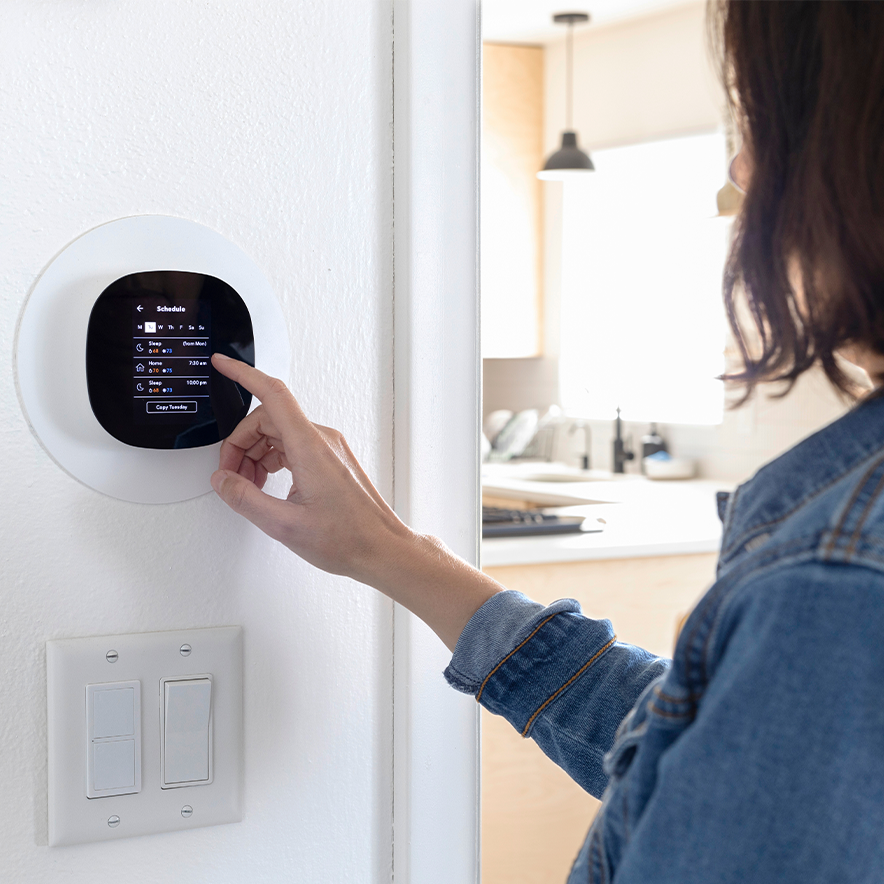
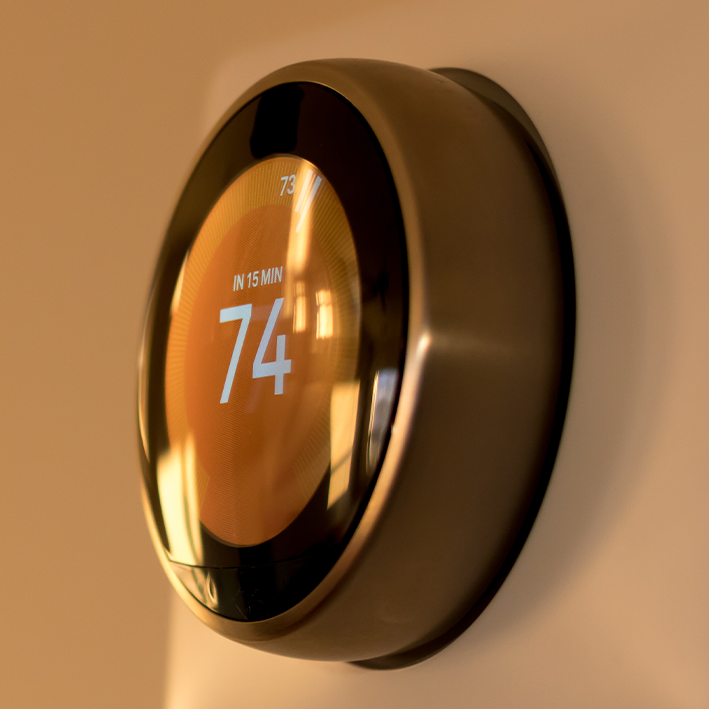
Digital thermostats are identified by their LED or LCD digital readout and data entry pads or buttons. They offer the widest range of features and flexibility, and digital thermostats can be used with most heating and cooling systems. They provide precise temperature control, and they permit custom scheduling. Programming some models can be fairly complicated; make sure you are comfortable with the functions and operation of the thermostat you choose. Remember-- you won't save energy if you don't set the controls or you set them incorrectly. Hybrid systems combine the technology of digital controls with manual slides and knobs to simplify use and maintain flexibility. Hybrid models are available for most systems, including heat pumps.
Hybrid Thermostat
Hybrid Thermostats are a combination of both digital controls with manual slides and knobs to simplify use and maintain flexibility. They are usually available for most systems, including heat pumps.
Occupancy Thermostat
Occupancy thermostats maintain the setback temperature until someone presses a button to call for heating or cooling. They do not rely on the time of day. The ensuing preset "comfort period" lasts from 30 minutes to 12 hours, depending on how you've set the thermostat. Then, the temperature returns to the setback level. These units offer the ultimate in simplicity, but lack flexibility. Occupancy thermostats are best suited for spaces that remain unoccupied for long periods of time.
Light Sensing Thermostat
Light sensing heat thermostats rely on the lighting level preset by the owner to activate heating systems. When lighting is reduced, a photocell inside the thermostat senses unoccupied conditions and allows space temperatures to fall 10°F below the occupied temperature setting. When lighting levels increase to normal, temperatures automatically adjust to comfort conditions. These units do not require batteries or programming and reset themselves after power failures. Light sensing thermostats are designed primarily for stores and offices where occupancy determines lighting requirements, and therefore heating requirements.
By turning your thermostat back 10 to 15 degrees for 8 hours, you can save 5% to 15% a year on your heating bill - a savings of as much as 1% for each degree if the setback period is eight hours long.

-
Yes it is. Mitsubishi, Daikin, Carrier and all other manufactures are phasing out the manufacturing of Ductless Air Conditioning ONLY stems. They are being replaced by high efficiency Ductless Heat Pumps, which provide both air conditioning and heating.
It doesn't make economic sense for the manufactures to rearrange an assembly line to make cooling only units, when there is very little cost difference from the manufacturing process of a heat pump.
Find out more about Ductless Heat Pumps here
-
If you know a friend, family member, neighbor, or coworker who’s been having heating or cooling issues, send them our way, and we’ll take great care of them. Refer someone who may need to repair or replace their furnace, boiler, air conditioner, heat pump, water heater, or any other HVAC service.
Your Reward: When your referral purchases a system from Air, Inc., you’ll receive $250. Some of our customers have earned $500–$1,000 just for sending people they know. There is no limit to the number of rewards you can earn. -
Ductless mini-split systems are a premium home comfort solution, not a quick window-unit install. A professionally installed single-zone system typically starts around $6,500–$8,500, depending on the home and installation needs. Multi-zone systems serving several rooms can vary more. Each system requires a licensed, experienced crew to ensure efficiency, safety, and long-term reliability. We provide professional in-home evaluations so you know exactly what’s right for your home and budget.
-
With a multi-zone ductless heat pump, you can connect multiple indoor air handlers—often up to eight—to heat and cool different rooms independently.
-
A ductless heat pump works by moving heat, not creating it. In the summer, it pulls heat out of your home to keep you cool. In the winter, it extracts heat from the outdoor air—even when it’s cold—and brings it inside. Each indoor unit controls the temperature of its own room, providing efficient, quiet comfort without ductwork.
Heating, ventilation, and air conditioning (HVAC) systems are essential for maintaining a comfortable, healthy, and energy-efficient home. A properly functioning HVAC system not only keeps indoor temperatures steady year-round—it also improves air quality by filtering out dust, allergens, and pollutants. Regular maintenance ensures your system runs efficiently, lowering energy bills and extending its lifespan. Whether it’s keeping your family cool in the summer or warm in the winter, your HVAC system plays a vital role in creating a safe and comfortable living environment.

- Ansonia
- Beacon Falls
- Berlin
- Bethany
- Branford
- Bridgeport
- Cheshire
- Chester
- Clinton
- Cromwell
- Deep River
- Derby
- Durham
- East Haddam
- East Hampton
- East Haven
- East Lyme
- Essex
- Fairfield
- Guilford
- Haddam
- Hamden
- Killingworth
- Lyme
- Madison
- Meriden
- Middlebury
- Middlefield
- Middletown
- Milford
- Monroe
- Naugatuck
- New Haven
- Niantic
- North Branford
- North Haven
- Northford
- Old Lyme
- Old Saybrook
- Orange
- Oxford
- Portland
- Prospect
- Seymour
- Shelton
- Southbury
- Southington
- Stratford
- Trumbull
- Wallingford
- Waterbury
- West Haven
- Westbrook
- Wolcott
- Woodbridge
Other Thermostat Considerations
The location of your thermostat can affect its performance and efficiency. Read the manufacturer's installation instructions to prevent "ghost readings" or unnecessary furnace or air conditioner cycling. Place thermostats away from direct sunlight, drafts, doorways, skylights, and windows. Also make sure your thermostat is conveniently located for programming.
Some modern heating and cooling systems require special controls. Heat pumps are the most common and usually require special setback thermostats. These thermostats typically use special algorithms to minimize the use of backup electric resistance heat systems. Electric resistance systems, such as electric baseboard heating, also require thermostats capable of directly controlling 120 volt or 240 volt line-voltage circuits. Only a few companies manufacture line-voltage setback thermostats.
The best thermostat for you will depend on your lifestyle and comfort level in varying house temperatures. While automatic and programmable thermostats save energy, a manual unit can be equally effective if you diligently regulate its setting--and if you don't mind a chilly house on winter mornings. If you decide to choose an automatic thermostat, you can set it to raise the temperature before you wake up and spare you some discomfort. It will also perform consistently and dependably to keep your house at comfortable temperatures during the summer heat, as well.
Looking for a price? Get a no cost, no obligation free estimate.



Branford, CT 06405 Map & Directions